
Protecting Wild Birds Part 1: Government Proposes to Carry on Hunting Red and Amber Listed Birds
The Department for Environment, Food and Rural Affairs (Defra) recently surveyed opinions on proposed changes to Schedule 2.1 of the Wildlife and Countryside Act 1981 using a consultation called “Protecting Wild Birds". But, its contents were nothing short of disturbing.
Reframing
Did you know that legislation designed to protect wildlife in Great Britain has a whole section dedicated to preserving the rights of those who want to kill birds? It is called Schedule 2.1 of the Wildlife and Countryside Act 1981 (WCA 1981). It is, in essence, a Kill List.
This would be like creating a clause for murderers in the Human Rights Act. And yet this Kill List is protected with a disquieting ferocity.
Schedule 2.1, or as we call it, the Kill List
A quick overview shows 24 species of bird [1] “listed” on Schedule 2.1 can be hunted, although not necessarily in all countries in Great Britain. They can legally be hunted for entertainment in an allotted open season. This usually overlaps with their breeding season.
Shockingly, 17 of these 24 wild birds are listed on the Birds of Conservation Concern. Seven of which are on the Red List and 10 are on the Amber List. Red being the highest level of conservation concern.
Just take a moment to absorb that. This means legislation designed to protect wildlife not only allows the killing of birds for fun, but also those struggling to survive as a species.
Overview of Consultation
The consultation's title, Protecting Wild Birds, is a promising start. But it quickly becomes clear that its priority is to protect the rights of hunters.
While there are 17 bird species struggling for survival on the Kill List, the English, Scottish and Welsh governments only included 6 of those in this consultation. Four of which are Red Listed (2) and two Amber Listed (3).
It gets worse. Of these 6 birds covered in the consultation, the government only suggests the removal of 2 species across all 3 countries from the Kill List. These are the pochard and the European white fronted goose.
While this is good news, some, or all 3 countries, propose the continued hunting of 2 of the 4 red listed species (4), and both of the existing Amber Listed birds (5). If these proposals taste like a placebo pill, that's probably because it is one.
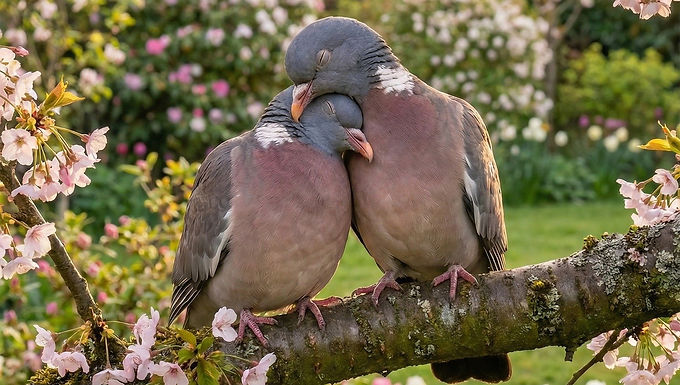
The third Amber Listed bird on the consultation is the woodpigeon. All 3 governments propose adding this protected bird to the Kill List. Woodpigeons would then face a double jeopardy. Death by the Kill List and by General License. The latter is a downloadable exemption that allows landowners to bypass wildlife legislation.
Birds Not Covered
Let's be blunt, if the objective of the consultation was about ‘protecting wild birds’ then it should have included the 11 other threatened species on the Kill List.
Of the bird species not covered by the consultation, sadly three are red-listed (6) and eight are amber-listed (7). This means they will continue to be failed by the same insufficient protection measures.
More of that in the next article in the series....
Key
Capercaillie is extinct in England + Wales and has been removed from Schedule 2.1 in Scotland so is not included in the list of 25 bird species.
European White-Fronted goose, goldeneye, pochard and woodcock
Pintail and snipe
Goldeneye and woodcock
Pintail and snipe
black grouse, ptarmigan and grey partridge
gadwall, greylag goose, pink-footed goose, mallard, moorhen, shoveler, teal and wigeon