
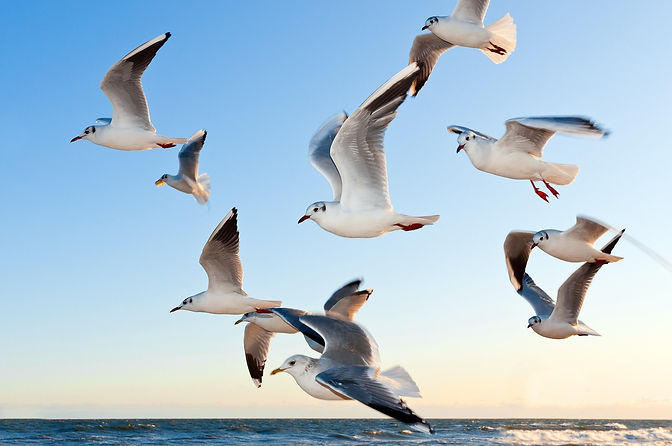
HUMAN-GULL COEXISTENCE
This project aims to help people understand the UK's gulls, appreciate their importance in nature, and promote practical, humane solutions that reduce conflict between people and wildlife. By understanding why gulls behave as they do, we can replace negative perceptions with knowledge, compassion, and coexistence.
.jpg)
Why Do Gulls Live in Our Towns?
Many people think gulls have become a problem, but they are simply adapting to an environment that humans have changed.
Why have gulls left the coast?
-
Overfishing has reduced their food supply.
-
Climate change has increased coastal storms, making nesting sites less secure.
-
Rising sea temperatures have changed where fish are found.
Why have gulls moved into towns?
-
Readily available food from litter and overflowing bins.
-
Flat rooftops that resemble the cliffs where many gulls naturally nest.
-
Safe places to raise their young.
Gulls are responding to threads and opportunities created by people. They are not choosing to be a nuisance.
UK Gulls (Common & Notable Species)
The UK is home to a variety of gull species, including:
Herring Gull
(Larus argentatus)
-
Large, grey-backed gull with pink legs.
-
Common in coastal towns and cities.
-
Often misunderstood due to scavenging behaviour.
Conservation status: Red-listed in the UK due to significant long-term population declines.
One of the UK's best-known gulls, often seen along the coast and in towns. Herring Gulls are intelligent birds that have adapted to urban life as natural food sources have declined.
.jpg)

Lesser Black-backed Gull (Larus fuscus)
-
Slender gull with dark grey/black back
-
Migratory; increasingly urban
Conservation status: Amber-listed in the UK.
This species breeds across much of the UK and increasingly nests on buildings where suitable habitat exists.
Great Black-backed Gull
(Larus marinus)
-
UK’s largest gull
-
Powerful predator/scavenger, mainly coastal
Conservation status: Red-listed in the UK.
The UK's largest gull is usually found along the coast but occasionally visits urban areas.


Common Gull
(Larus canus)
-
Smaller and gentler-looking than herring gull
-
Often inland in winter
Conservation status: Red-listed in the UK.
Despite its name, this species has declined in many areas and is often found inland during winter.
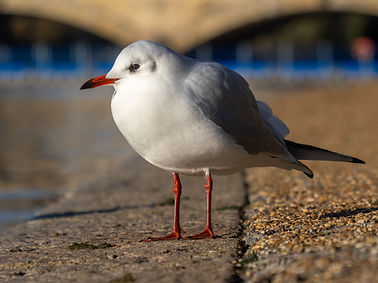
Black-headed Gull
(Chroicocephalus ridibundus)
-
Chocolate-brown head in breeding season
-
Very adaptable; often seen in parks and towns
Conservation status: Amber-listed in the UK.
Frequently seen in parks, lakes and coastal areas, this smaller gull develops a chocolate-brown head during the breeding season.
.jpg)
.jpg)
Kittiwake
(Rissa tridactyla)
-
Cliff-nesting seabird
-
Declining in parts of the UK due to food shortages
Conservation status: Red-listed in the UK.
Unlike many other gulls, Kittiwakes spend most of their lives at sea and nest on coastal cliffs. Their populations have declined because of changes in marine ecosystems and food availability.
Mediterranean Gull
(Larus melanocephalus)
-
Expanding UK population
-
Striking white head in summer
Conservation status: Amber-listed in the UK.
A striking white-headed gull that has become more common in parts of southern Britain.

_a_(4834254958).jpg)
Little Gull
(Hydrocoloeus minutus)
-
Smallest gull species in Europe
-
Rare inland sightings
Conservation status: Green-listed in the UK.
The smallest gull found in Europe, usually seen on lakes, reservoirs and estuaries during migration.

HUMAN-ANIMAL CONFLICT SOLUTIONS
Many conflicts with gulls can be prevented without harming wildlife.
Manage waste responsibly
-
Use secure bins with closed lids.
-
Dispose of litter properly.
-
Never leave rubbish bags exposed.
Do not feed gulls
-
Feeding encourages birds to approach people for food.
-
Human food does not provide a healthy diet for gulls.
Protect buildings humanely
-
Install bird-safe deterrents before the breeding season (this does not include nets).
-
Never disturb active nests, eggs or chicks, which are protected by law.
Respect nesting birds
-
During spring and early summer, gulls may defend their chicks by calling loudly or swooping. This behaviour is temporary and ends once the young have fledged.
Support conservation
-
Protect coastal habitats.
-
Reduce plastic pollution.
-
Learn about the wildlife that shares our communities.
Urban Planning & Coexistence
-
Design waste systems that reduce scavenging opportunity
-
Protect natural breeding cliffs and coastal feeding zones
-
Encourage public education rather than persecution
WHY GULLS MATTER
Gulls are an important part of the UK's natural heritage. As scavengers and predators, they help recycle nutrients and play a valuable role in coastal and marine ecosystems.
Like many wild animals, gulls are adapting to a world that humans have changed. Their presence in our towns is not a sign that they are 'pests' but a reminder of how wildlife responds to environmental change.
By reducing food waste, protecting natural habitats, and using humane methods to prevent conflict, we can create communities where both people and gulls can thrive.

Our Message
The question is not, 'How do we get rid of gulls?'
It is, 'How can we change our behaviour so that people and wildlife can share the spaces we both depend on?'
When we choose understanding over blame, we take an important step towards a more compassionate relationship with nature.